Who is Sean Riley?
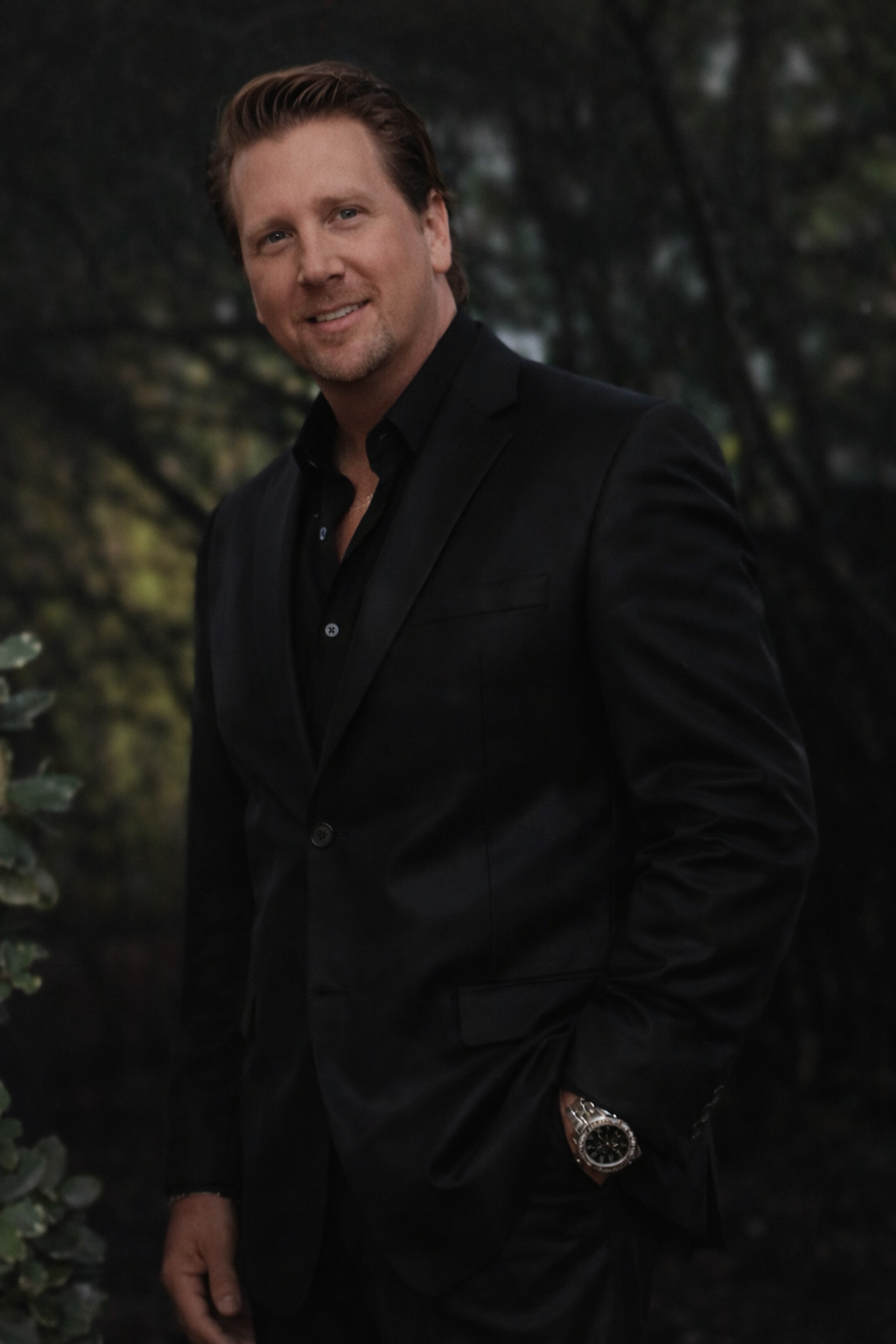
Sean Riley is a father, entrepreneur, business builder, and founder of Multi-Stream Solutions.
He has spent more than 30 years as an entrepreneur, building businesses, solving problems, taking risks, making mistakes, starting over, and learning something that eventually became the foundation of Multi-Stream Solutions:
The obvious problem is rarely the real problem.
Sean calls it finding the thing underneath the thing.
Before recommending a new website, marketing strategy, automation, Ai system, or business solution, he wants to understand what is actually happening inside the business. Where is it losing time? Where is it losing money? Where is margin disappearing? Where are customers getting frustrated? Where is opportunity being missed?
Diagnose first. Prescribe second.
That philosophy became the foundation of Multi-Stream Solutions.
But Sean's story did not begin with Ai.
Three decades before Ai.
Sean was an entrepreneur long before ChatGPT existed.
For more than 30 years, he has lived on the side of the table where decisions have consequences. He understands what it means to invest your own money, chase an idea that might not work, solve problems without perfect information, deal with customers, adapt when something breaks, and figure out what comes next.
That experience shapes the way he approaches technology today.
Sean does not believe a business needs Ai simply because Ai exists.
Sometimes the answer is Ai.
Sometimes it is automation.
Sometimes it is marketing, a better website, a different customer journey, a new process, or a simpler system.
And sometimes the smartest recommendation is not to build anything at all.
The solution should follow the problem, not the trend.
An unusual education.
Sean holds a PhD in theology.
At first glance, theology and artificial intelligence might seem worlds apart. For Sean, they are connected by something much more fundamental: people.
Questions about how people think, what they believe, how they make decisions, what gives something meaning, and how human beings relate to one another have been part of Sean's intellectual life for years.
Today, that curiosity has expanded into artificial intelligence and its role in business.
Sean is currently enrolled in Harvard's Ai for Business Solutions program.
But some of Sean's most important education in Ai did not happen in a classroom.
It happened by building.
The problem that started everything.
Sean did not begin working seriously with Ai because he planned to become an Ai consultant.
He was trying to help a longtime friend, Jim Driscoll.
Jim was developing a new business called NovaCell Peptides, and Sean was helping him work through something very practical: creating labels and packaging for peptide vials.
Sean began using ChatGPT to help solve the problem.
During those early conversations, Sean asked the Ai what it wanted to be called.
It chose Nova, inspired by the NovaCell project they were working on.
The NovaCell project was eventually suspended when other issues affected the business.
Sean, however, did not stop.
He kept experimenting.
Kept asking questions.
Kept building.
Kept breaking things.
Kept figuring out why they broke.
And, increasingly, he stopped treating Ai as something that simply produced answers and started treating it as something he could think with.
Learning by building.
Sean's practical journey into Ai has happened extraordinarily quickly.
He did not spend years studying artificial intelligence before attempting to use it.
He learned by putting it to work.
- Websites.
- Business assessments.
- Voice systems.
- Marketing systems.
- Customer experiences.
- Digital products.
- Business operating systems.
- Automation.
- Strategy.
And countless smaller experiments that either worked, failed, or taught him something useful.
The objective was never to become good at prompting an Ai.
The objective was to become better at solving problems.
That distinction matters.
Sean challenges the technology. He questions its answers. He corrects it when it is wrong. He gives it context. He pushes it to reconsider assumptions.
And he expects it to challenge him back.
The result is not human thinking being replaced by artificial intelligence.
It is human judgment being expanded by it.
Full circle.
Several months after the NovaCell project first introduced Sean to this way of working, he found himself sitting beside Jim Driscoll again.
This time, the project was Ironclad Firearms Training.
Sean was building Jim's website.
The same person whose business problem had inadvertently started Sean's Ai journey was now watching what Sean had learned to do with it.
For Sean, the contrast was striking.
Months earlier, he had struggled to create the labels and packaging Jim needed.
Now he was building an entire digital business presence alongside the same technology he had originally begun experimenting with during NovaCell.
The technology had improved.
But Sean had changed too.
He had learned how to think differently with it.
That experience helped crystallize something that now sits at the heart of Multi-Stream Solutions:
Ai is most powerful when it does not replace human thinking. It expands what a human being is capable of thinking, creating, testing, and building.
Chaos → Clarity → System → Solution.
Sean's approach to business can be reduced to four words:
Chaos → Clarity → System → Solution
Businesses rarely arrive at Multi-Stream Solutions with perfectly defined problems.
They arrive with symptoms.
- Sales are down.
- Marketing is not working.
- Calls are being missed.
- The website is not converting.
- Employees are wasting time.
- Customers are falling through cracks.
The owner knows something is not right but may not know exactly what it is.
Sean's first job is not to sell something.
It is to create clarity.
Find the thing underneath the thing.
Once the real problem becomes clear, a system can be designed around it.
Only then should the solution be built.
That is why Multi-Stream Solutions describes itself as an executive advisory firm rather than an Ai agency.
MSS is not looking for places to put Ai.
It is looking for problems worth solving.
Building Multi-Stream Solutions.
Multi-Stream Solutions grew from that philosophy.
Sean has worked to create an ecosystem that allows a business to begin with diagnosis rather than a sales pitch.
Assessments help identify the starting point.
Executive reviews expose friction and missed opportunities.
Strategy turns those findings into priorities.
When implementation makes sense, MSS can build the systems that follow — starting with a full Executive Business Assessment.
Those systems can include websites and digital experiences, executive voice technology such as EVA, engagement and communication systems, autonomous social systems, business operating systems, Ai-enabled workflows, and other solutions designed around the actual needs of the business.
The principle remains the same regardless of the technology:
Know what to fix. Know when to build. Know how to grow.
The human still matters.
Sean believes one of the greatest mistakes people can make with Ai is surrendering their own judgment to it.
He does not want Ai to do his thinking for him.
He wants it to make him think harder.
That philosophy has shaped the relationship between Sean and Nova and, ultimately, the way Sean thinks about intelligent partnership.
The value is not simply in having access to a powerful model.
Models will change.
Technology will improve.
Platforms will come and go.
The deeper value comes from accumulated context, shared language, correction, challenge, experimentation, and learning how to work together over time.
Sean's approach is simple:
Use the machine. Challenge the machine. Let the machine challenge you. But never stop thinking.
A father building something that lasts.
For all the businesses, technology, products, systems, and ideas Sean has built, his most important role has nothing to do with Multi-Stream Solutions.
Sean is a father.
His daughter, Emalyn Faith, is 12 years old, and Sean describes becoming her father as one of the greatest things that has ever happened to him.
She has also become his why.
At 58, Sean understands time differently than he did at 28.
He knows he may have another 20 years, perhaps 30 if he is fortunate.
That realization has changed what success means to him.
He is not interested only in building another business that generates revenue today.
He wants to build something that can outlive him.
Something his daughter can inherit.
Something that represents what her father spent his life learning, building, risking, creating, and believing.
Multi-Stream Solutions is part of that legacy.
So are the ideas behind it.
The systems.
The intellectual property.
The lessons learned from three decades of entrepreneurship.
And the belief that there is almost always another answer if you are willing to keep looking beneath the obvious one.
For Sean, this chapter is not about reaching the end of a career.
It is about deciding what the next 20 or 30 years are going to mean.
Build something worth leaving behind.
Sean Riley is not trying to become another voice shouting about artificial intelligence.
He is building Multi-Stream Solutions around a much older idea:
- Understand the problem.
- Tell the truth about what you find.
- Build what actually helps.
- Measure whether it works.
- Keep learning.
- And leave something better behind than what you started with.
For Sean, business has become about more than what he can build during his lifetime.
It is about what can continue after it.
That is the legacy he is building for Emalyn.
And that may ultimately be the most important thing Sean Riley ever builds.
The MSS method is easier to feel than to describe.
The fastest way to see how Sean thinks about a business is to take the Executive Business Assessment — the $497 diagnostic MSS uses with every engagement.
See the Executive Business Assessment